What Nigeria’s Climate-Finance Conversation Is Teaching Africa
Five case studies from Nigeria’s National Climate Finance Roundtable, read across the continent — for ministries, development banks, sub-national governments and private climate proponents.
Nigeria does not lack climate ambition, nor capital providers interested in climate outcomes. What it lacks is a reliable route between the two — and it is not alone.
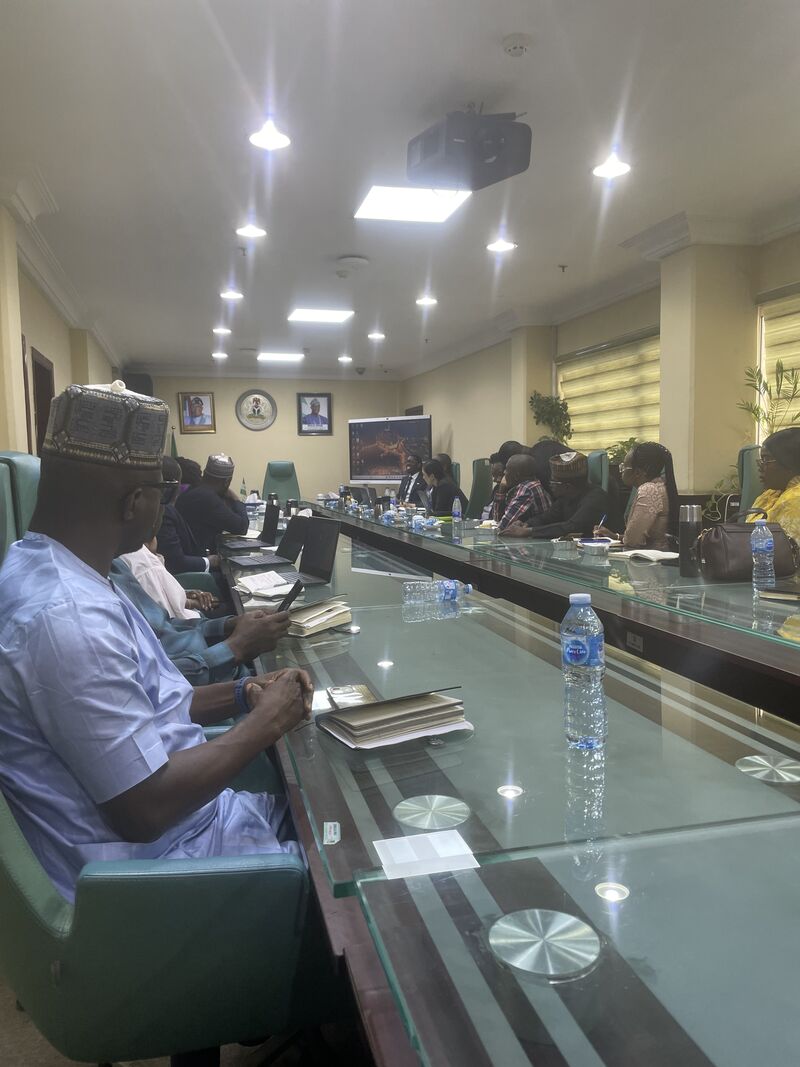
This series gathers five case studies from the National Climate Finance Roundtable, convened by Nigeria’s Federal Ministry of Finance in Abuja in September 2026. Each one starts from what policymakers, financiers, development partners and project developers told the Ministry, sets it beside comparable experience from Ghana, Kenya and Rwanda, and draws out what the pattern means for institutions facing the same question elsewhere.
Download the full series (PDF, 27 pages)
In this series
- Project Preparation Is Where Climate Finance Is Won or Lost — ministries, sub-nationals, developers
- The Right Capital at the Right Time — DFIs, banks, climate ventures
- A Common Language for Climate Investment Cases — project proponents, funds, investors
- Accreditation Is the Starting Line, Not the Finish Line — accredited and aspiring entities
- One System, Many Vehicles — finance ministries, national funds
01 · Project preparation is where climate finance is won or lost
Ask almost anyone in Nigeria’s climate-finance ecosystem why projects fail to attract investment and the answer is rarely “there is no money”. Far more often, the project was never ready to be financed: concepts arrive without feasibility work, credible demand data, the buy-in of the agencies and communities they affect, or a commercial model that can carry debt or equity. The gap between ambition and investment is, above all, a preparation gap.
- Predictable beats generous. Countries that give preparation its own window, as Rwanda has through Ireme Invest, appear to move concepts faster than those relying on whichever grant is available. The size of the pot matters less than whether proponents can plan around it.
- Readiness is the cheapest point of leverage. In the Kenyan case, a modest sequence of readiness and preparation support preceded a programme approaching USD 100 million.
- Preparation is moving down to the sub-national level. State-level readiness work suggests facilities will be needed at state and city level, not only in federal ministries.
02 · The right capital at the right time
Climate projects are often described as either “bankable” or “not bankable”, as though there were a single test to pass. In practice, different kinds of capital are built for different moments in a project’s life. Many Nigerian projects fail to raise funds not because they are poor, but because they knock on the wrong door at the wrong time: grants and technical assistance for early ideas; concessional finance, guarantees and patient equity while a project proves itself; commercial debt once there is a track record and steady cash flows.
- Guarantees are becoming the bridge of choice. From Nairobi to Abuja, the instrument that moves domestic banks is risk-sharing rather than cheaper money alone.
- The early-stage gap is continental and sector-specific. Catalytic vehicles are emerging for energy access, but few equivalents exist for adaptation, agriculture or waste.
- Ministries can shape the match without lending a naira. Publishing a stage-by-stage map of who finances what costs little and cuts the time sponsors spend at the wrong door.
03 · A common language for climate investment cases
Project proponents and financiers often talk past each other. Proponents present a vision; financiers look for evidence of demand, a credible sponsor, a sound financial model and a clear view of risk. Climate funds add their own tests on additionality and national alignment. Good projects are rejected for being presented in the wrong form rather than for being the wrong idea.
- The baseline is portable. The commercial core is the same in Lagos, Accra or Lusaka; only the climate layer changes, because it maps to each country’s NDC. A regional baseline with national climate annexes looks achievable.
- Two tools, two audiences. The Five Case Model suits public projects seeking budget approval; an Outline Business Case suits proponents facing financiers. Using both in sequence avoids rewriting the case for every audience.
- Data cost is the real barrier for smaller proponents. Shared, site-level data on demand and climate outcomes would do more for small sponsors than another template.
04 · Accreditation is the starting line, not the finish line
Accreditation to the Green Climate Fund is a significant achievement, and Nigeria is pursuing direct access alongside institutions already accredited or seeking to be. But accreditation is easily mistaken for the destination. It confers the right to bring projects to the Fund; it does not bring the projects. Considerable time can pass between accreditation and a first approved project without aggregation, pipeline development and the capacity to translate the credential into financing.
- Windows turn the readiness gap into a calendar risk. With the Fund’s revised framework introducing application windows, pipelines and safeguards systems built in parallel with accreditation are now a scheduling necessity.
- Multi-entity countries need a division of labour. As more countries accredit several national entities, informal pipeline-sharing protocols will matter more than any single accreditation. Nigeria is likely to set the template.
- The systems outlive the credential. Safeguards, gender and ESG systems built for the GCF are transferable assets with every other development and private funder.
05 · One system, many vehicles
Nigeria’s climate-finance architecture is growing: the Nigeria Climate Investment Platform, the statutory Climate Change Fund (not yet operational) and the pursuit of GCF Direct Access sit side by side. Growth brings a risk — several national vehicles approaching the same limited pools of capital with similar propositions. Ghana’s CRIP readiness proposal and Rwanda’s clear separation of preparation from later-stage finance point to the same answer: a portfolio of complementary vehicles presented to investors as one offer.
- The region is converging on a hub model. One coordinating platform with differentiated vehicles beneath it is emerging as the common answer.
- Roles matter more than numbers. The debate is less about how many vehicles exist than whether each has a distinct mandate, operating model and place in the capital structure.
- Coherence is visible in the data. Where flows are tracked across vehicles, duplication shows up early. Where they are not, investors see it first.
A closing reflection
Across all five case studies, one lesson recurs: the challenge is less about whether capital exists and more about whether the system is ready to use it.
The building blocks are the same everywhere: prepared projects with preparation funded as a predictable public function; capital matched to maturity; a common language for investment cases; accreditation backed by pipelines and systems built in parallel; and a coherent set of national vehicles presented as one offer. None of these emerge by accident — they require deliberate monitoring, honest evaluation and a willingness to adjust.
Download the full series (PDF, 27 pages)
Sources: National Climate Finance Roundtable Report (FMF, 2026); MINECOFIN Rwanda, Ireme Invest press release (26 Sept 2023); CTCN, KCB GCF programme (14 Apr 2026); GCF, CRIP-Ghana readiness proposal (2026).